
Floorboard Sanding
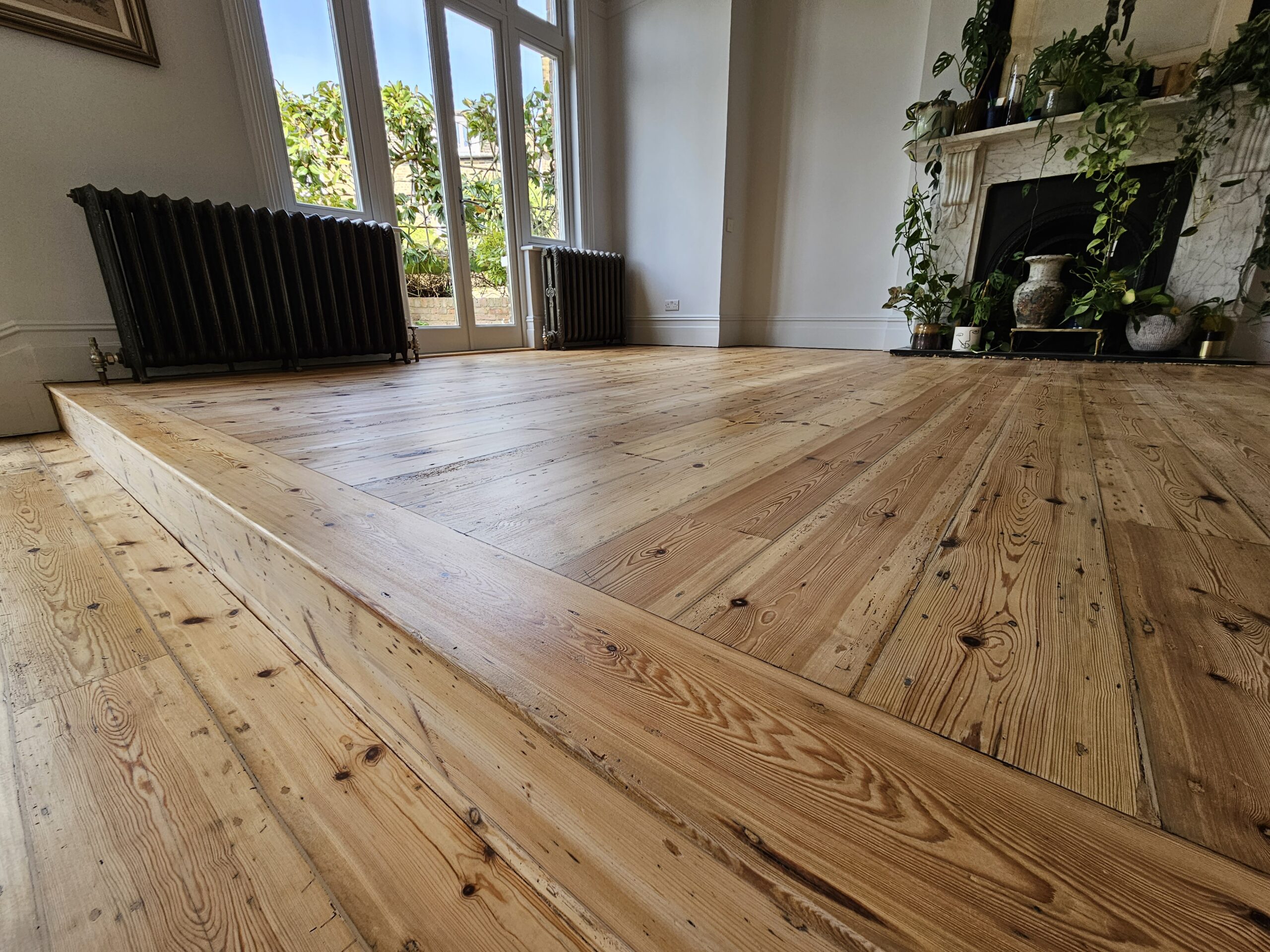
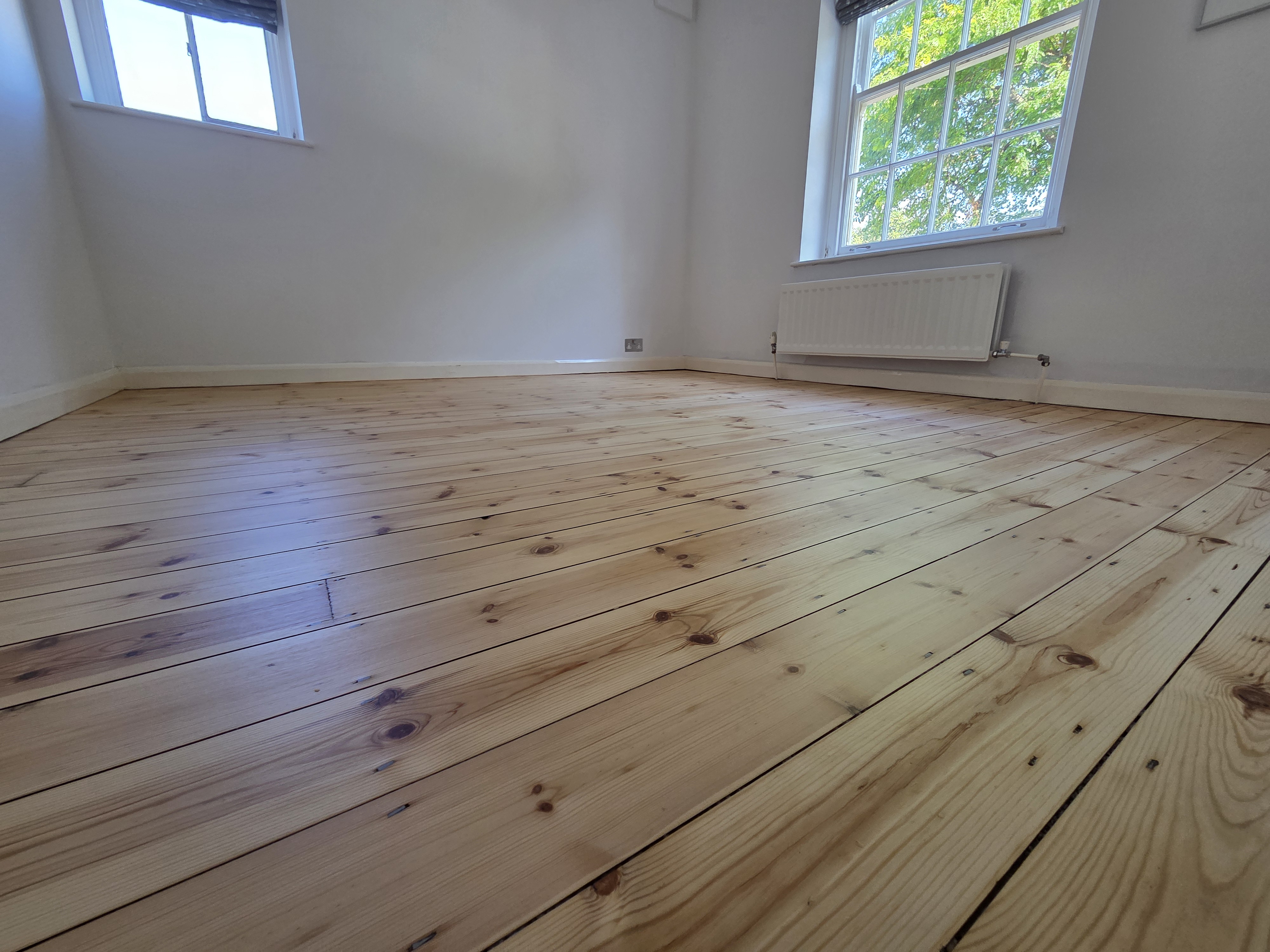
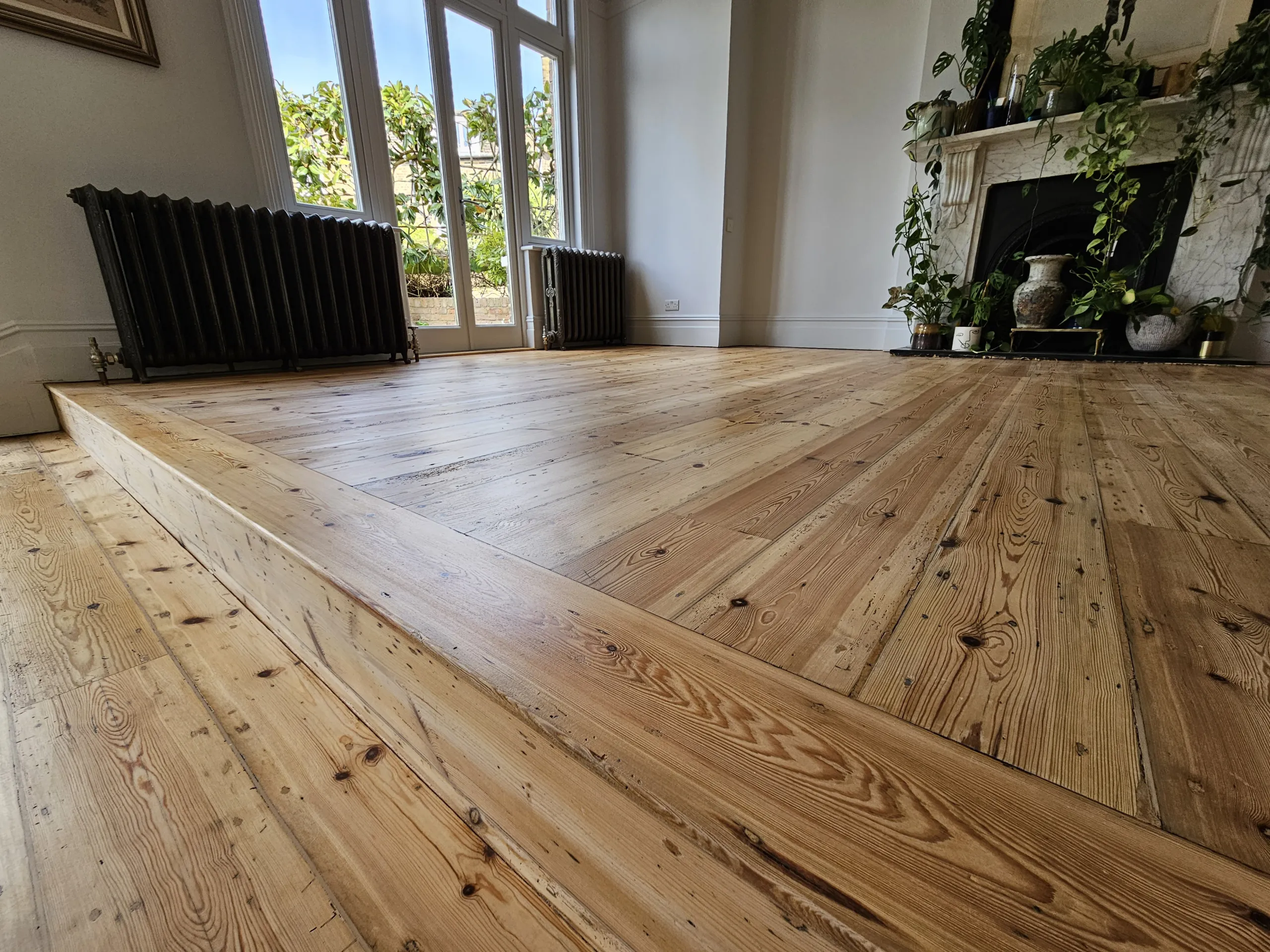
Floorboard restoration forms a large part of the work we complete each year, particularly in Victorian and Edwardian homes across South East London and Kent. Original pine boards often carry decades of wear, paint, bitumen or general surface damage, yet with the right preparation they can be restored to an exceptional standard.
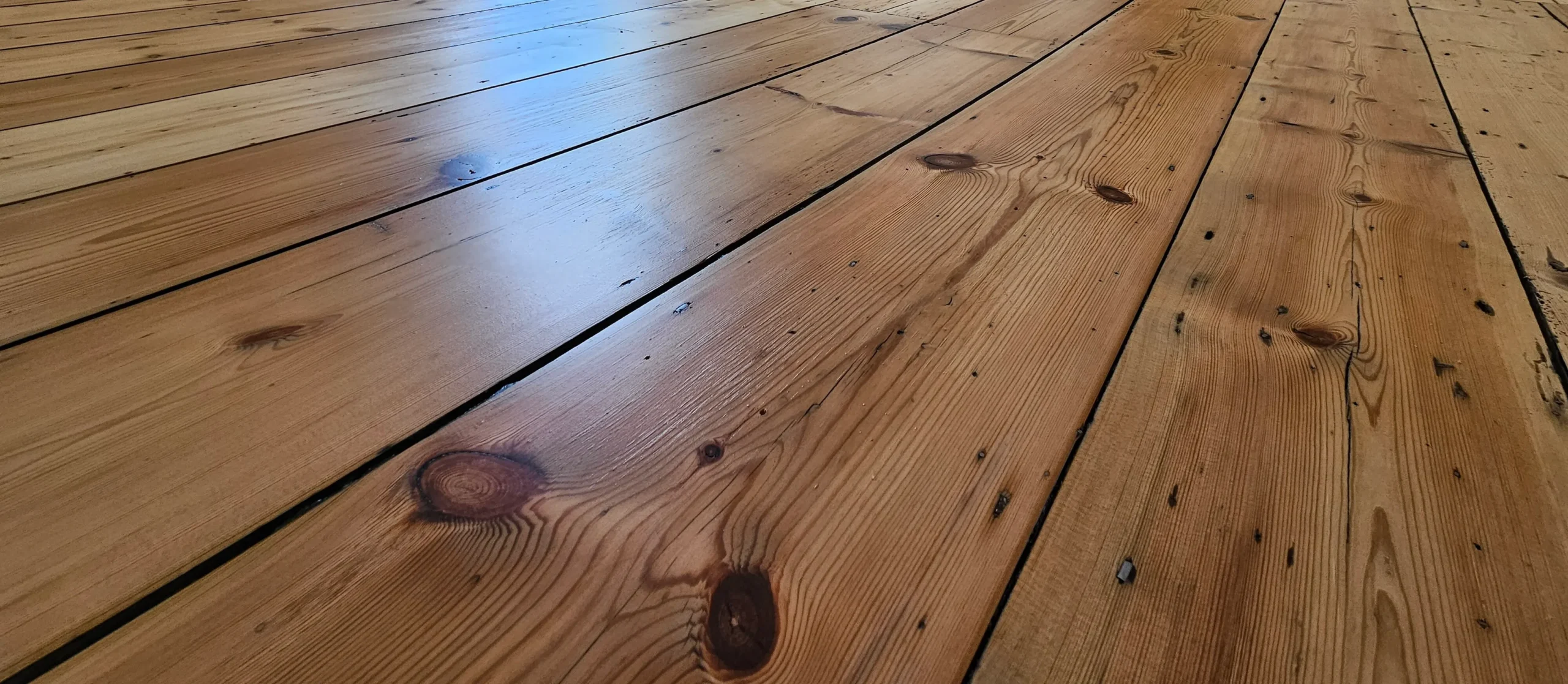
Pine floorboards behave differently to hardwood, so a controlled sanding approach is essential to achieve an even, consistent finish. We assess the age, movement and surface condition of the boards before planning the sanding sequence, ensuring the timber is prepared properly and the final result is smooth, balanced and durable.
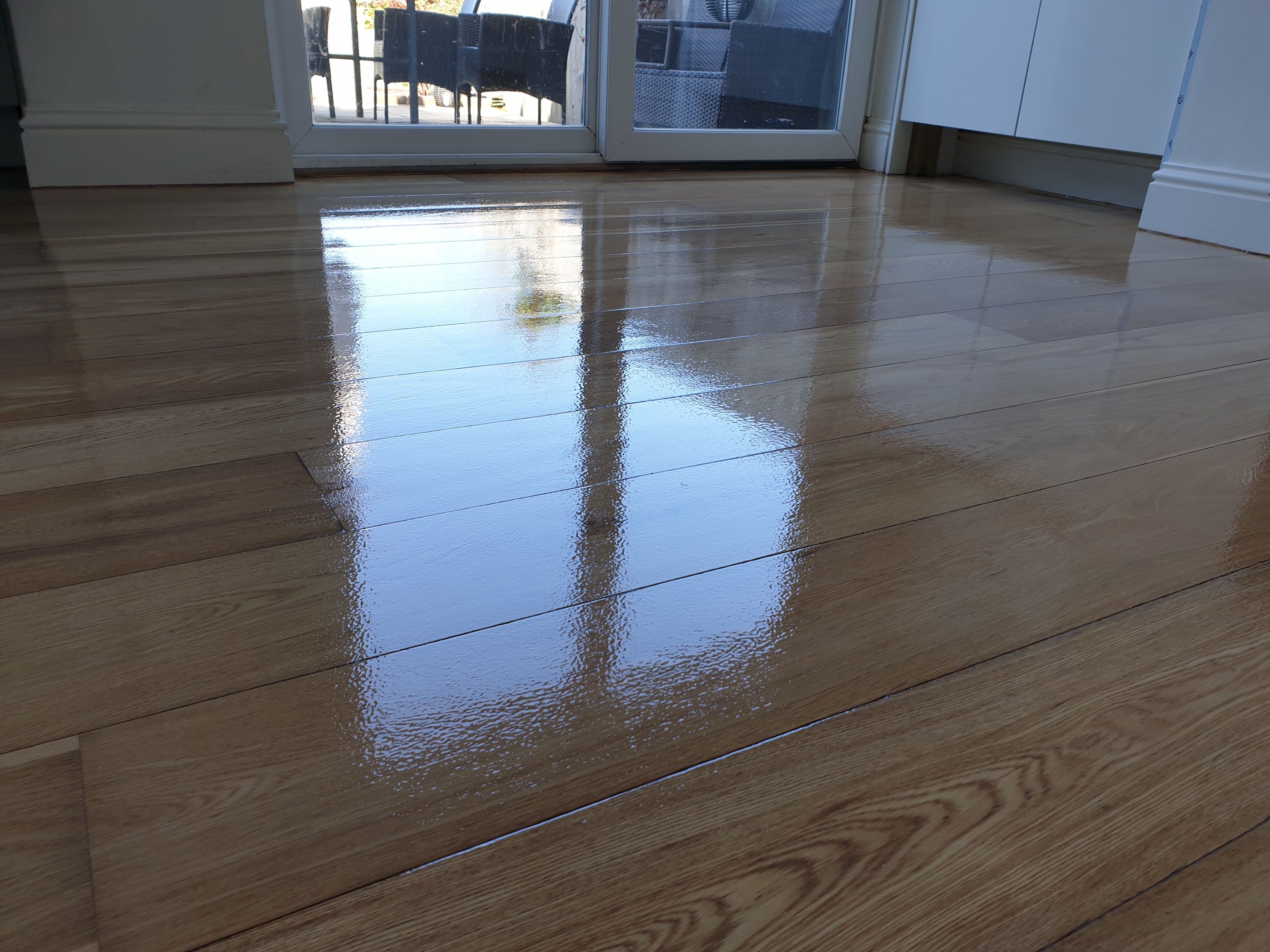
Many homeowners are surprised at how clean and bright their original boards become once professionally restored, especially when combined with a natural or lightly tinted finish. Our aim is always to maximise the character of the wood while delivering a long-lasting coating suitable for everyday use.
For a full overview of our wider methods, you can also view our main Floor Sanding & Restoration service.
Many homes across South East London and Kent still have original pine floorboards, which behave differently from hardwood. Softwood boards naturally develop gaps, cupping and general movement over time, and years of paint, varnish or heavy wear can leave the surface uneven. Our approach focuses on stabilising and preparing the boards properly so they sand cleanly and finish evenly, giving you a lighter, natural look with far better durability than the original coating. Whether the boards are from a Victorian terrace or a mid-century property, we tailor the sanding stages and finish system to suit the timber and how the room is used.
Wood Floorboards We Commonly Restore
We restore a wide range of original wood floorboards across South East London and Kent, including Victorian and Edwardian pine boards, painted floorboards, previously sanded boards and heavily worn floors that need careful preparation. Every floorboard project is assessed individually to check condition, board movement, previous repairs and overall suitability before sanding begins.
- Original pine floorboards
- Victorian and Edwardian floorboards
- Previously painted or sealed floorboards
- Worn and uneven floorboards
- Floorboards requiring careful preparation before finishing
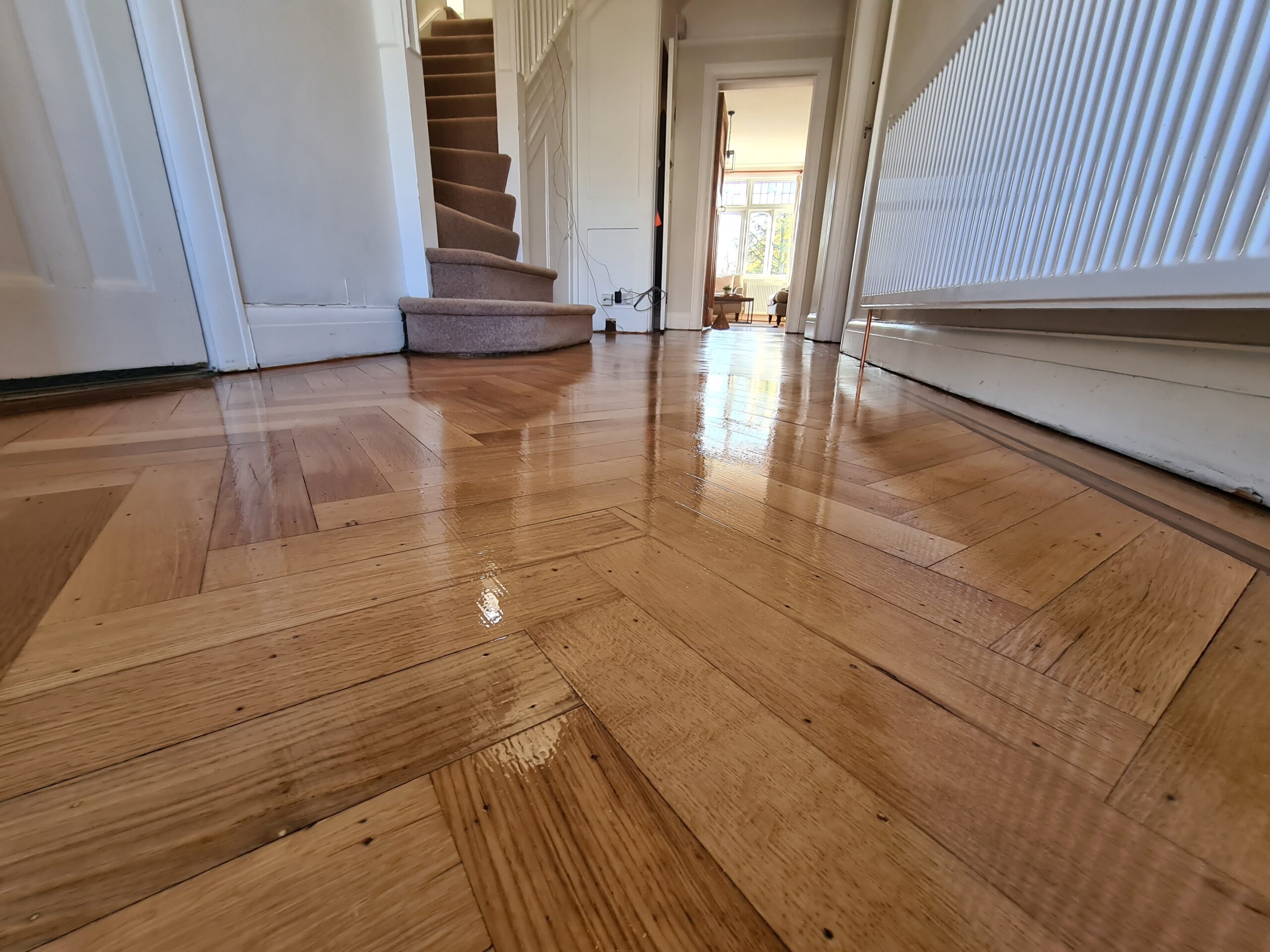
For related services, see our floor sanding services, gap filling for wooden floors and parquet floor restoration pages.
Original Floorboards, Restored – Not Replaced
Well-fitted, original boards are usually far better quality than many modern replacements. They are thicker, more stable and full of character. By restoring what is already there you:
- Retain the original features and feel of the property
- Avoid the disruption and cost of full replacement
- Reduce waste compared with installing new flooring
- Benefit from a floor that can be re-sanded again in future
Reclamation yards pay more than ever for quality reclaimed boards – a clear sign that well-preserved originals are increasingly valued.
Not sure whether your floorboards can be restored?
We assess the condition of original floorboards and advise honestly on what can be restored safely and what requires repair before sanding.
Typical Floorboard Projects We Take On
We are frequently instructed to restore floorboards in:
- Victorian and Edwardian terraced houses
- Georgian properties and period conversions
- Bedrooms, through-lounges and loft rooms
- Hallways, ground-floor reception rooms and home offices
Many of these floors have been hidden under carpets for decades. Once old staples, gripper and coatings are removed, the boards can be sanded back to clean, natural timber and finished in a durable lacquer or oil.
Our Floorboard Sanding & Repair Process
- Initial checks and preparation
We assess board thickness, condition and movement to confirm they can be sanded safely. - Securing loose or squeaky boards
Loose boards are re-fixed where possible and dangerous fixings are dealt with to protect our sanding machinery. - Gap filling and local repairs
Gaps or damaged areas can be improved using resin and sawdust or replacement boards where appropriate. - Professional, dust-controlled sanding
We use modern, dust-extraction machinery to flatten the floor and remove old coatings efficiently. - Premium finishing systems
After vacuuming, we apply high-quality lacquers or oils selected for durability and long-term performance. - Final inspection and aftercare
We walk the job with you where possible and provide straightforward aftercare guidance.
Are Your Floorboards Suitable for Sanding?
Many local homes still have their original Pine or hardwood boards beneath old carpets. Most can be sanded and refinished several times over their lifetime. Replacement is usually only required where boards are rotten, heavily damaged or dangerously thin.
We always advise honestly on what can be restored safely and what should be repaired before any sanding takes place.
Occasionally we will advise against sanding if:
- The boards are extremely thin from previous sanding
- There is widespread rot or structural damage
- Sections have been patched with unsuitable materials
In these cases, we explain the reasons clearly and recommend the most suitable, long-lasting solution for your floor.
When a “Quick Sand” Isn’t Suitable
Floorboards are often heavily worn, previously painted or affected by deep staining and movement over time.
In these situations, light sanding or surface-level treatments will not achieve a consistent or durable finish.
A full sanding process is required to properly restore the boards and ensure the finish performs as expected.
We will always advise honestly on what is required — even if that means recommending against short-term solutions.
Floorboard Sanding in South East London & Kent
We regularly restore original floorboards across South East London and North-West Kent, covering Beckenham, Bromley, Blackheath, Brockley, Dulwich, Eltham, Greenwich, Hither Green, Herne Hill, Orpington, Sevenoaks and surrounding postcodes.
If you are unsure whether your boards are suitable, we can usually advise from clear photos and basic measurements before any visit is booked.
For most domestic projects we can provide an initial estimate from:
- Your full postcode or address
- Photos of each area to be sanded
- Basic measurements or an estate agent floorplan
- The floor level (ground floor, first floor, loft, etc.)
You can send these details quickly using our online form, and we will come back to you with clear advice and next steps.
Why Choose Restore Floor Sanders?
Floorboard Sanding FAQs
Can you sand painted or bitumen-covered floorboards?
Yes. Most painted or bitumen-coated floors can be restored using the correct sanding sequence and professional dust-extracted machinery. Heavy coatings may take longer to remove, and we will advise if this affects how many more future sanding’s are possible.
What about gaps and draughts between the boards?
We can reduce gaps and draughts using resin and sawdust, acrylic mastic or replacement boards. The best method depends on gap size, board movement and what’s underneath the floor. We discuss the most suitable option for each room.
My floorboards creak or move. Can this be fixed?
Light movement is normal in older properties, but loose boards can usually be secured during preparation. If we identify sub-floor or joist issues, we will highlight them and recommend the appropriate tradesperson if specialist work is needed.
How dusty is the floorboard sanding process?
Our sanding system is fully dust-extracted, which keeps airborne dust to an absolute minimum throughout the job. We take care to protect surrounding areas and maintain a clean, well-managed workspace from start to finish.
How long before we can walk on the floor again?
Most modern lacquers allow light foot traffic in socks after the initial drying stage. Full curing takes longer and depends on temperature, ventilation and the products used. We provide clear timings for your specific project.