

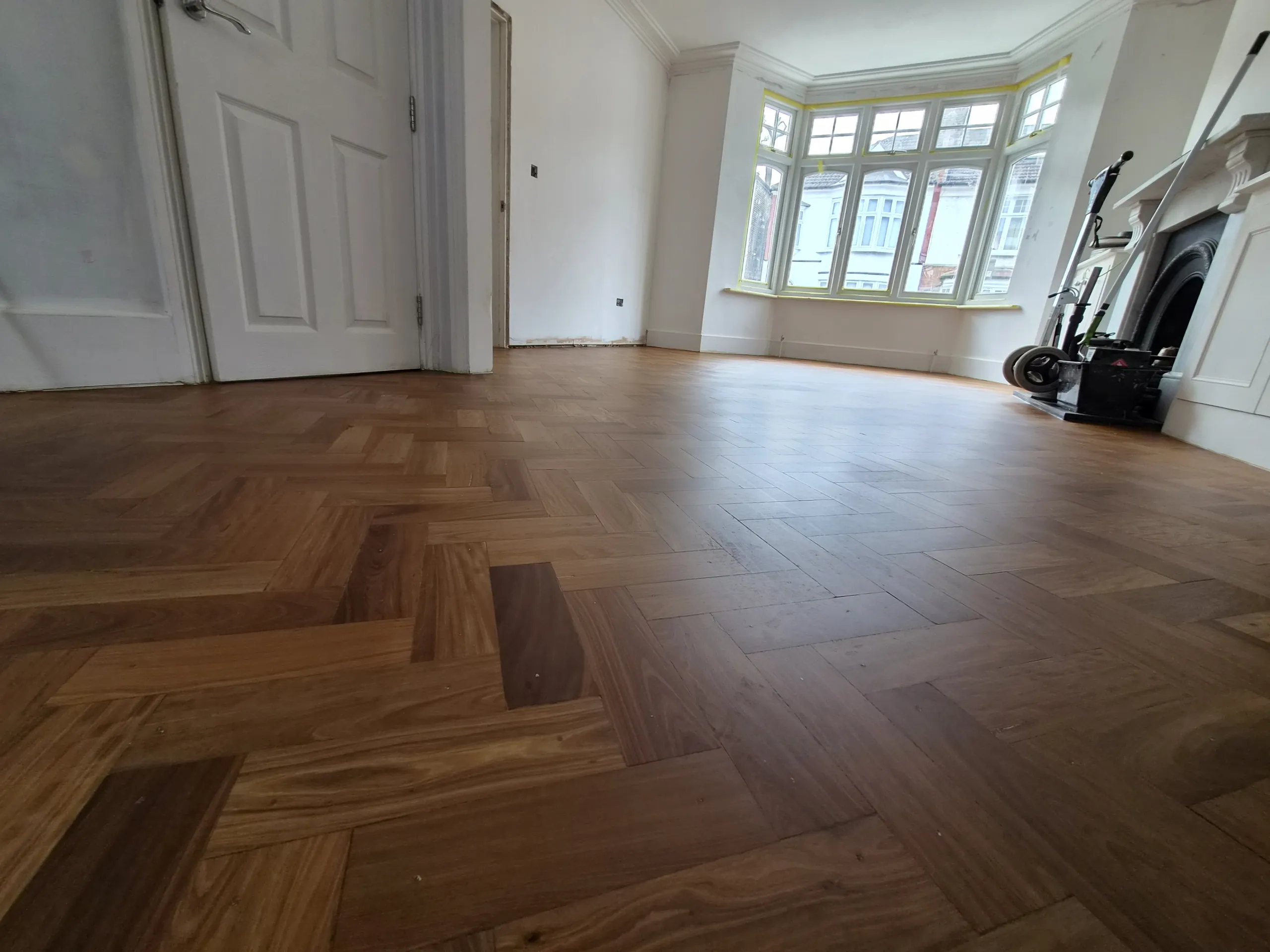
Restoring Wooden Floors After Buying a Home
Professional floor sanding and restoration for tired floorboards, parquet and hardwood floors before you move in or furnish the property.
Bought a Home With Wooden Floors?
If you have recently bought a property, this is often the best time to restore the wooden floors. Empty rooms give better access, make repairs easier to assess and allow the sanding and sealing process to be completed before furniture, boxes and day-to-day living get in the way.
Many homes across South East London and North-West Kent have original floorboards, parquet or hardwood floors that can look tired, dull or heavily worn when first uncovered. Some floors are already exposed when the property is purchased, while others are discovered after old carpets are removed.
Professional floor sanding and restoration can help these floors look cleaner, brighter and more in keeping with the character of the home. This can be especially useful before moving in, decorating fully or furnishing the property.
At Restore Floor Sanders, we restore wooden floors in recently purchased homes, renovation projects and empty properties, including original floorboards, parquet flooring and hardwood floors that need sanding, repairs, sealing or gap filling.
Why Restore the Floors Before Moving In?
Once beds, wardrobes, sofas and boxes are in place, floor sanding becomes much more disruptive. Carrying out the work while the property is empty or mostly clear is usually cleaner, more efficient and easier to manage.
It also gives you the chance to deal with loose boards, gaps, stains, old finishes or worn parquet before the home is fully set up. For many homeowners, this is the ideal stage to restore the floors properly rather than trying to work around furniture later.
Restored wooden floors can add warmth, character and a more finished feel to a property, helping the home feel cleaner and more cared for from the start.
Ready to assess your new home’s floors?
Send floor photos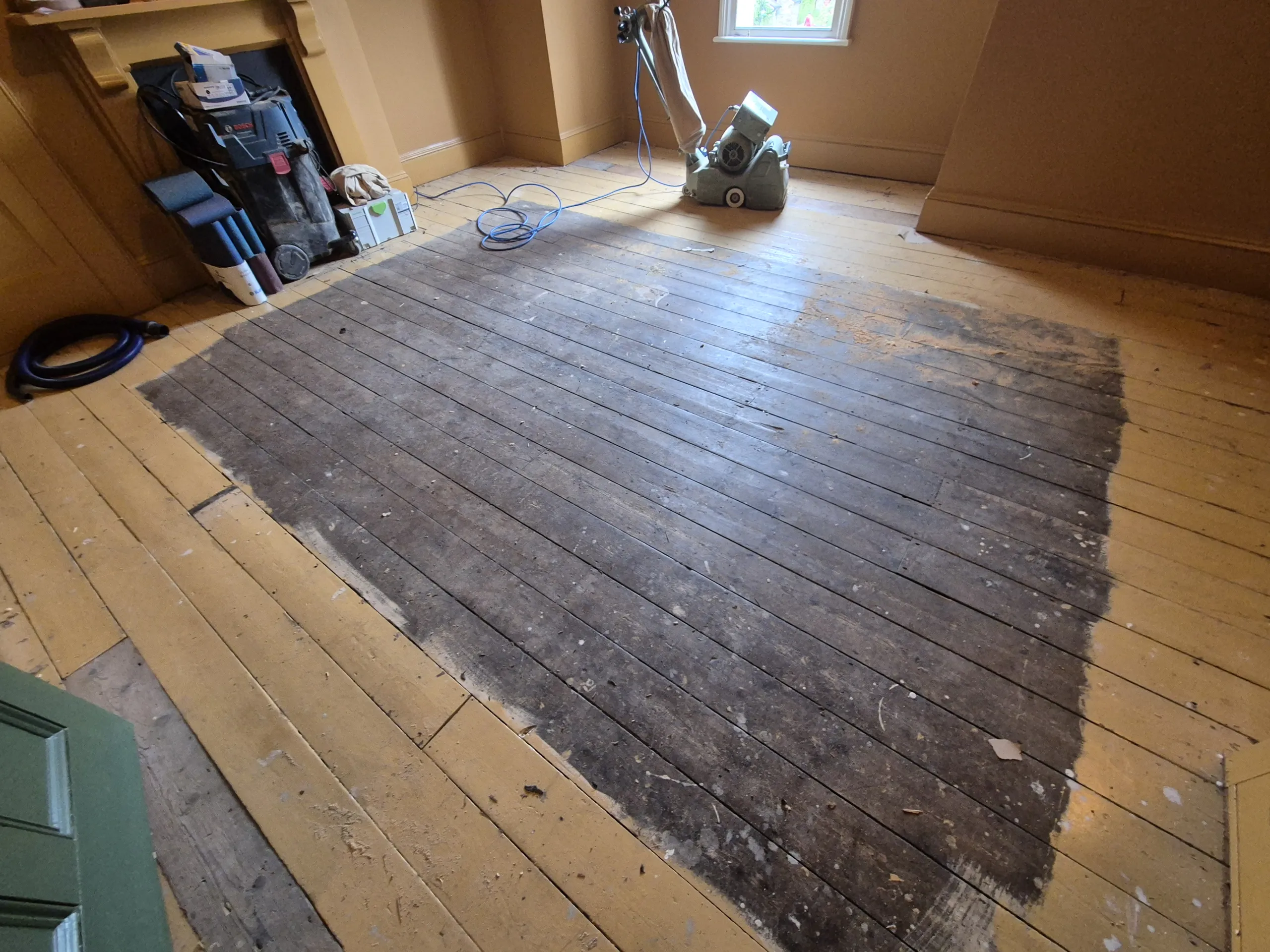
Exposed Floors or Floors Found Under Carpet
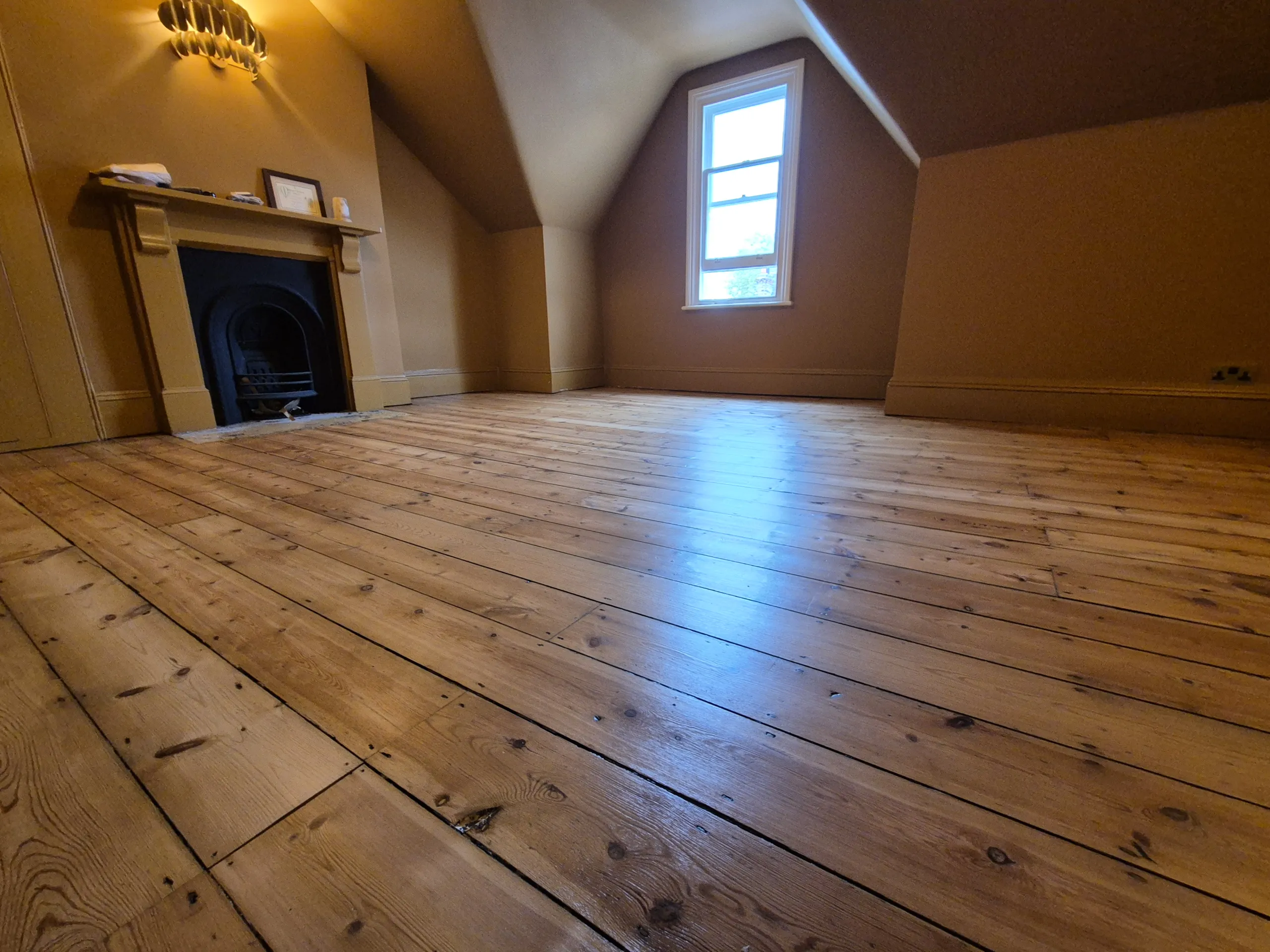
Some homeowners buy a property with wooden floors already exposed, while others discover original floorboards or parquet after lifting old carpets. Either way, the floor may look worse at first than it really is.
Old carpet, underlay, gripper rods, paint marks, stains, scratches and previous DIY work can all make a floor look difficult to restore. In many cases, the timber underneath can still be repaired, sanded and sealed to create a cleaner, more attractive finish.
Can Floorboards Be Repaired or Replaced?
Many original floorboards can be restored, even when they have gaps, stains, loose sections or areas of damage. Depending on the condition of the floor, repairs may include securing loose boards, replacing damaged sections, countersinking nails or sourcing suitable replacement boards where needed.
Gaps between floorboards can also often be filled, although the best method depends on the size of the gaps, the movement in the floor and the overall condition of the boards. Some floors are suitable for gap filling, while others are better left with their natural movement and character.
Parquet Floors Under Carpet
Parquet flooring is sometimes found underneath carpets in older homes, particularly in hallways, living rooms and dining rooms. These floors can often look tired, loose or heavily marked when first uncovered, but many parquet floors are well worth assessing before deciding to cover or replace them.
Where suitable, parquet can be repaired, sanded and finished to bring back its pattern, warmth and character. Loose blocks, missing sections, old adhesive residue and uneven areas may need attention before sanding and sealing.
Cleaner, Easier-to-Maintain Floors
Old carpets can hold dust, pet hair, stale odours and general wear from previous occupants. Removing old carpets and restoring the wooden floors underneath can help a home feel fresher, cleaner and easier to maintain.
Wooden floors are also practical for many households because they can be swept, vacuumed and cleaned more easily than old fitted carpets. We would not claim floor sanding cures allergies, but for many homeowners, replacing old carpets with sealed wooden floors can make the property feel cleaner and less dusty.
Found floorboards or parquet in your new home?
Request an estimate
How to Keep Costs Down Before We Arrive
The easiest way to keep the work efficient is to arrange floor sanding before moving furniture into the property. Empty or mostly clear rooms allow better access to the whole floor and reduce the time spent working around obstacles.
If carpets are still down and you are confident removing them yourself, take care when cutting and lifting them. Hook blades are usually safer than standard straight Stanley blades because they are less likely to cut deeply into the timber underneath. Avoid dragging gripper rods, nails or sharp underlay fixings across the floor, as these can cause deep scratches.
Carpet and underlay disposal can often be arranged through local council bulky waste collection services, sometimes at reasonable rates. It is worth checking with your local council before assuming the carpet needs to be taken away privately.
If floorboards are loose, please be careful before fixing or lifting them yourself. Pipes, cables and old fixings can be hidden underneath. If you are unsure, send photos first and we can advise whether the floor is likely to need repair work before sanding.
Painted Stairs and Lead Paint Risk
We generally avoid sanding painted stairs, especially in older properties, because old paint may contain lead. Painted staircases usually need specialist assessment and safe removal methods before any sanding is considered.
This page is mainly aimed at wooden floors in rooms, hallways and larger areas rather than painted staircases. If your stairs are painted, it is best to treat them separately and avoid sanding until the coating has been properly assessed.
Our Process
Start by sending clear photos of the floors, room sizes, property location and preferred timing. If carpets have not yet been removed, photos of lifted corners or small exposed areas can still be useful, but a clearer assessment is usually possible once the carpets are up.
We review the information supplied and provide an initial estimate based on the floor type, condition and project scope. For larger or more detailed projects, a site visit can be arranged before confirming the final quote.
Once the work is booked, floors are professionally sanded using dust-controlled equipment before being sealed with a suitable lacquer or oil finish. Repairs, replacement boards, gap filling or parquet work can be discussed where needed.
Useful Floor Restoration Services
If you are planning work after buying a home, you may also find these services helpful: floorboard sanding and restoration, parquet floor restoration, gap filling and floor sanding services.
Frequently Asked Questions
Is it best to sand wooden floors before moving in?
Yes, in most cases this is the best time. Empty or mostly clear rooms allow better access, make the process more efficient and avoid the difficulty of working around furniture once the home is fully occupied.
Can old floorboards be sanded after removing carpet?
Often, yes. Many old floorboards can be repaired, sanded and sealed after carpets are removed, although the final options depend on the timber condition, gaps, stains, previous damage and how securely the boards are fixed.
Can parquet flooring under carpet be restored?
Many parquet floors can be restored if the blocks are still suitable for repair and sanding. Loose blocks, missing sections, adhesive residue or uneven areas may need attention before sanding and finishing.
Can gaps between floorboards be filled?
In many cases, yes. The right method depends on the width of the gaps, the movement in the floor and the condition of the boards. Some floors are suitable for filling, while others are better left with natural movement.
Should I remove carpets before you visit?
If you are confident doing so, removing carpets can make the floor easier to assess. Use care when cutting and lifting carpets, avoid scratching the timber underneath and take care around gripper rods, nails and staples.
Do you sand painted stairs?
We generally avoid sanding painted stairs, especially in older properties, because old paint may contain lead. Painted stairs usually need specialist assessment and safe removal methods before sanding is considered.
Do you cover South East London and Kent?
Yes. We cover South East London and North-West Kent, including Bromley, Beckenham, Blackheath, Greenwich, Dulwich, Forest Hill, Brockley, Eltham, Sidcup, Bexley, Chislehurst and surrounding areas.
Ready to restore the floors in your new home?
Send your details